Buying art from a living artist vs. a deceased one: what changes
Buying from a living artist means acquiring directly from the studio, with price and documentation set at the moment of sale. Buying from a deceased artist means entering an established secondary market — priced through auction history and buyer's premiums — where provenance is reconstructed after the fact, not issued firsthand.
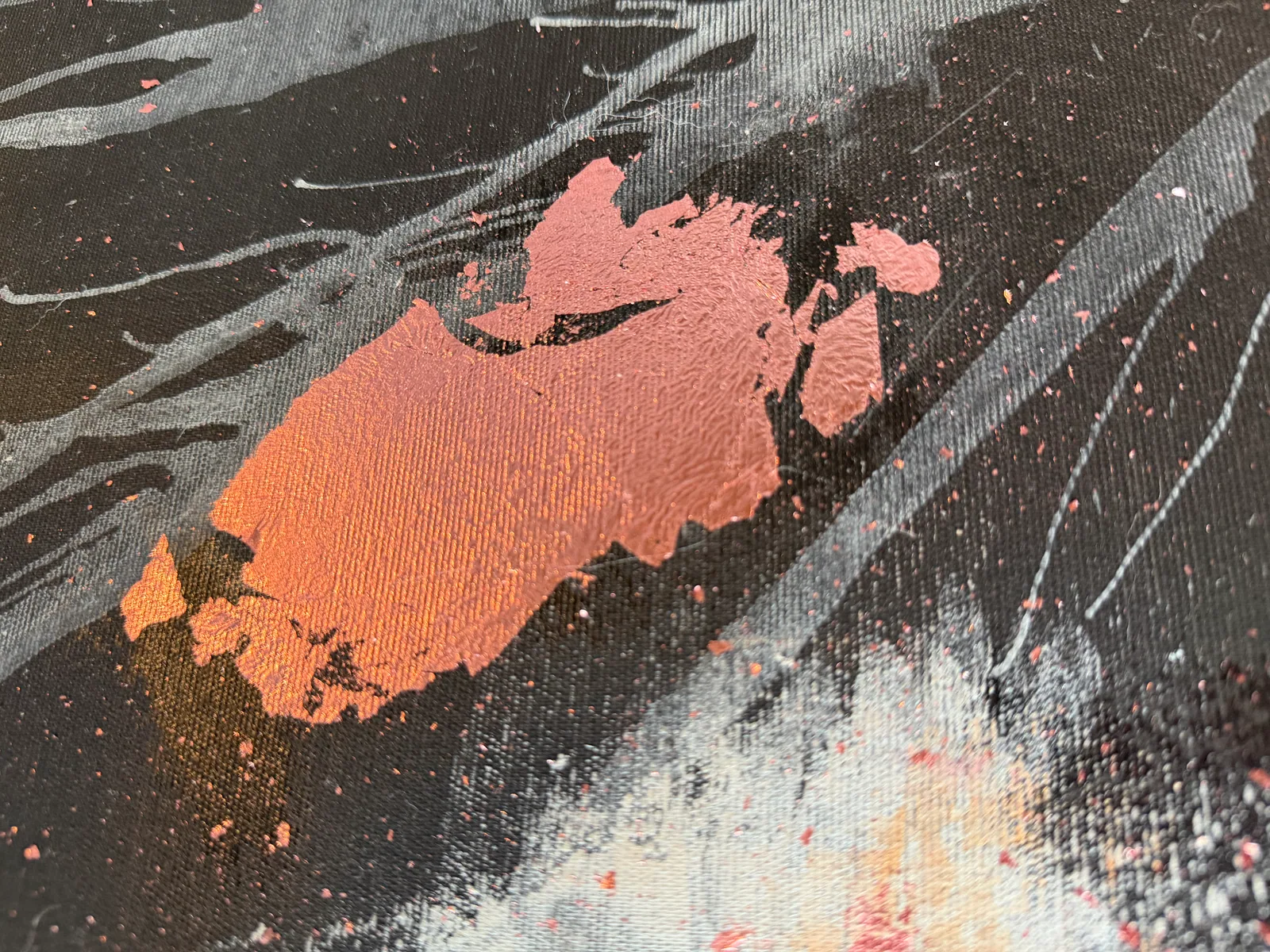
Primary market vs. secondary market: the mechanism that actually differs
Every artwork transaction sits in one of two markets. The primary market is the first sale of a work — through a gallery or directly from the artist's studio — and it exists only for living artists, since a first sale requires someone who can still sell the piece. The secondary market is every sale after that: auction houses, dealers reselling inventory, private resale between collectors. For a deceased artist, the secondary market is the only market there is — there is no "direct from the studio" option once the artist is gone.
The practical effect shows up first in price. Buying primary — closer to the source — typically means a better price than the same body of work would command once it has passed through a gallery markup or an auction premium, but the trade-off is that a living artist's future reputation, unlike a historical name, is still being written. Buying secondary trades that uncertainty for scale: it is the only way to access established or historical names, along with a documented sales history that lets a buyer track how a specific artist's prices have moved over years or decades.
What buying secondary actually costs — the buyer's premium
A cost that rarely shows up in the advertised price of an auction lot is the buyer's premium — a fee auction houses add on top of the hammer price, paid by the winning bidder. Under Sotheby's fee structure in effect since February 2026, that premium runs 28% on hammer prices up to $2 million, 22% between $2 million and $8 million, and 15% above that. Christie's structure, in place since September 2025, sits close: 27% up to $1.5 million, 22% up to $8 million, 15% above.
That premium sits on top of whatever the hammer price already reflects of an artist's market history — it is not negotiable, and it does not exist when a work is acquired directly from a living artist's studio, where the price shown is the price paid. It is one of the clearest financial differences between the two routes, and one that collectors new to the market frequently miss until the final invoice arrives.
Documentation and provenance: issued at the source vs. reconstructed later
For a living artist, provenance can start clean: the studio issues a certificate of authenticity, an archive record and a dated sale at the moment of acquisition, and that first entry belongs to the buyer. For a deceased artist, provenance has to be reconstructed after the fact — from exhibition records, prior sales and surviving correspondence — and the reference that ends up settling authenticity questions is the catalogue raisonné: a comprehensive, annotated listing of everything the artist made. Inclusion in it functions as a de facto authentication; a work's absence from it raises real questions about the piece.
A catalogue raisonné is ideally compiled or overseen by someone with no financial stake in the works it catalogs, working from whatever survives on paper. It is rigorous, but it is retrospective by definition. A living artist's documentation has no such gap to close: it is written by the person who made the work, while the work is still being made.
Risk: what's actually different for the buyer, not what sounds different
The instinct is to assume a living, less-established artist is the riskier purchase and a historical name is the safe one. The reality splits differently. With a living artist, the open question is trajectory — whether the work will be recognized more widely in twenty years, which nobody, including the artist, can promise. With a deceased artist, the open question is authenticity and title — whether the work is genuinely by the hand it is attributed to, and whether ownership has passed cleanly through every previous owner. Both are real risks; they are simply different risks, not degrees of the same one.
What reduces each risk is not the artist's status but the paper trail. A living artist's studio can hand a buyer a first-day certificate and a direct line to ask questions. A historical purchase leans on the strength of the catalogue raisonné, exhibition history, and the seller's own reputation. Neither guarantees the other kind of certainty — a first-day certificate says nothing about future market recognition, and a strong catalogue raisonné says nothing about a work's future price.
Which route fits a first-time or international buyer
For someone acquiring their first serious piece — or acquiring from outside the artist's home country — the primary market tends to be the more manageable entry point. There is one seller to talk to, one set of documents, and a price that is not shaped by decades of resale history or a buyer's premium layered on top. It is also the more direct route to ask the questions a first-time or international buyer usually needs answered: how a piece ships, what documentation travels with it, how a certificate is issued.
In the studio's own practice, that international relationship is handled directly: shipping is quoted per destination, documentation goes out with the piece, and the same certificate a domestic collector receives — with archive number, technical data and image — travels with a work leaving Brazil. None of that replaces the judgment call every buyer has to make about a specific artist's work; it just means the paperwork is not the obstacle.
From the studio
From the studio: why documentation starts on day one
Every piece that leaves this studio gets its Archive ID the moment it's finished — not years later, not after someone else decides it matters. Genesis of Flame, from the Heart of Chaos series, has carried AP-HOC-2025-001 since the day I signed it; the certificate, the technical sheet, the dossier all exist before the piece ever meets a collector.
I think about that difference every time someone asks whether buying from an artist who's still working is riskier than buying an established name. It isn't riskier in the way people mean — it's just different. Nobody has to reconstruct where one of my pieces has been, because it hasn't been anywhere yet except the studio. What I can't offer is a decades-long sales history; what I can offer is a paper trail with no gaps, written by the person who actually made the work, in real time, piece by piece.
Frequently asked
What is the real difference between buying from a living artist and a deceased one?
The clearest difference is where the price and the paperwork come from. Buying from a living artist means the price is set once by the artist or studio, and documentation — certificate, archive record, dossier — is issued at the moment of sale. Buying from a deceased artist means the work exists only in the secondary market: priced through auction history and buyer's premiums, with provenance and authenticity reconstructed afterward through records like a catalogue raisonné rather than handed over firsthand.
Is art from a living artist a riskier purchase?
Not riskier — differently risky. With a living artist, the open question is the artist's future trajectory, which nobody can promise. With a historical or deceased artist, the open question is authenticity and clean title, since the work has already passed through other hands. A living artist's studio can offer a first-day certificate and a direct line for questions; a historical purchase leans on catalogue raisonné records and the seller's reputation. Neither eliminates risk — each simply addresses a different kind of it.
Can you buy directly from a living artist, without a gallery?
Yes. Buying directly from a working artist's studio is the primary market by definition — it is the first sale of the piece, with no gallery or auction house between the artist and the buyer. It typically means a more direct price, since there is no gallery markup layered in, and a more direct relationship for questions about the work, payment terms, and shipping. It is a legitimate, common way to acquire original art, not a workaround.
Does provenance work differently for a living artist's work?
Yes. For a living artist, provenance can start clean at the point of sale: a certificate of authenticity, an archive number and a dated record of the transaction, issued directly by the person who made the work. For a deceased artist, provenance has to be pieced together afterward — from exhibition history, prior sales and surviving records — and the catalogue raisonné becomes the reference that settles authenticity questions, ideally compiled by someone with no financial stake in the works it catalogs.
Which one is more likely to be affordable for a first-time collector?
The primary market is generally the more accessible entry point. Buying directly from a living artist means a price that is not shaped by decades of resale history, gallery markups, or an auction buyer's premium — which alone can add roughly 15% to 28% on top of the hammer price at major auction houses. It is also simpler logistically: one seller, one set of documents, and, in the case of the Perfeito Studio archive, prices published upfront rather than discovered at auction.
Sources
- One Art Nation — 2026-08-09
- International Catalogue Raisonné Association (ICRA) — 2026-08-09
- The Art Newspaper — 2026-08-09
Thinking about acquiring from an artist who's still working?
Ask about a specific piece, international shipping, or how the studio's documentation works — replies come directly from Alyne.
Talk to the studio on WhatsApp
Published on